
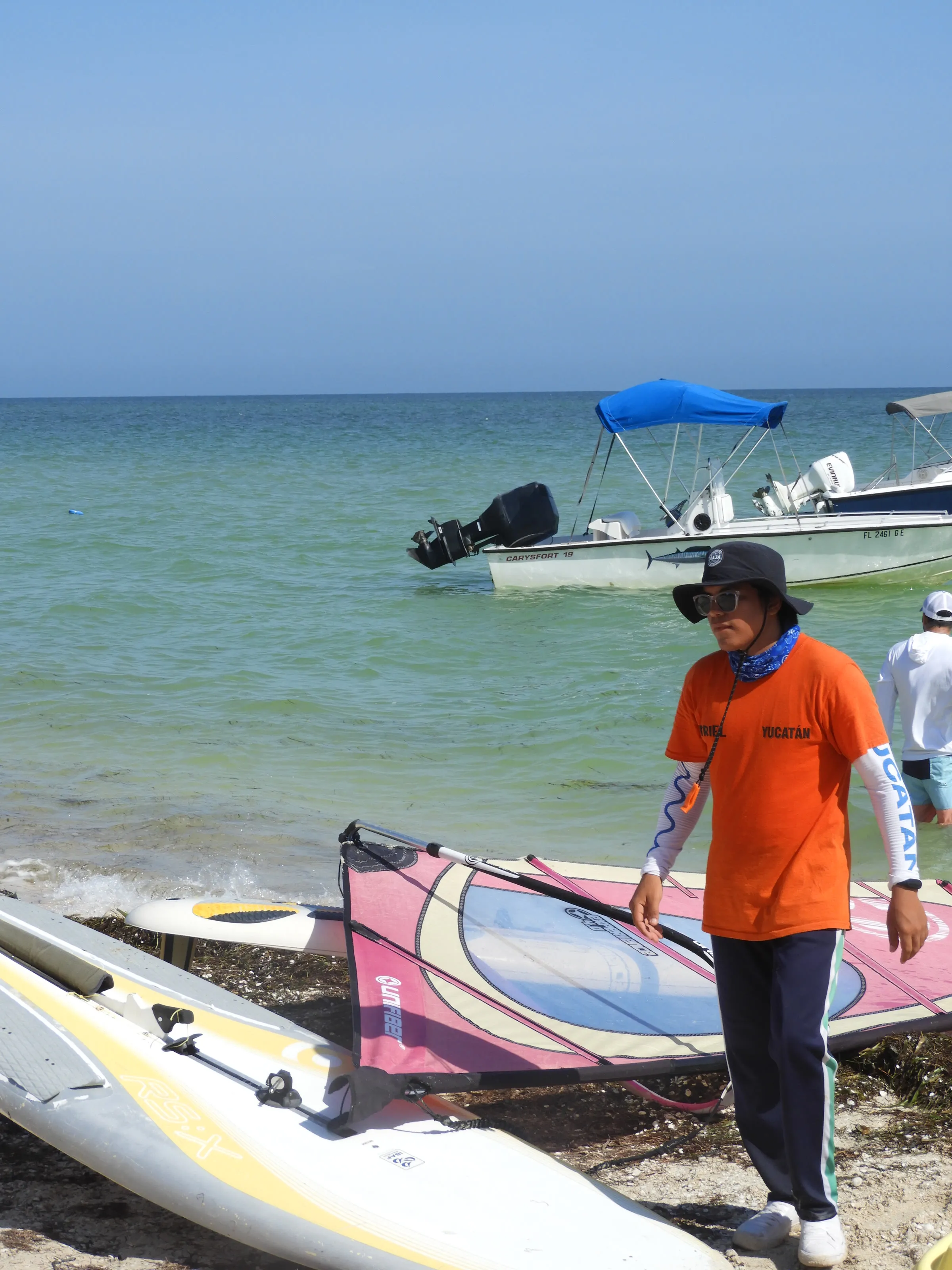
Windsurf and Hobie Wave school in Progreso.
You start from zero, and we teach in English.
Teaching this is the best part of the job
The best day at work is the one where somebody who turned up knowing nothing stands up for the first time and looks round for you with a face that says I did it. So here is the whole road to that day, start to finish.
You get on the board, you lose your balance and you fall in. Then you do it again, dozens of times, before those ten seconds. That is normal, it happened to all of us, and it does not mean you are doing it wrong — it is literally how sailing is learned.
The water here comes up to your chest and sits at 28 °C, about 82 °F. When you fall, you stand up. You will get tired and you will laugh, in that order.
What we will not promise you is that you will be planing by the end of one afternoon. This starts on your first day and it does not finish when the course does.
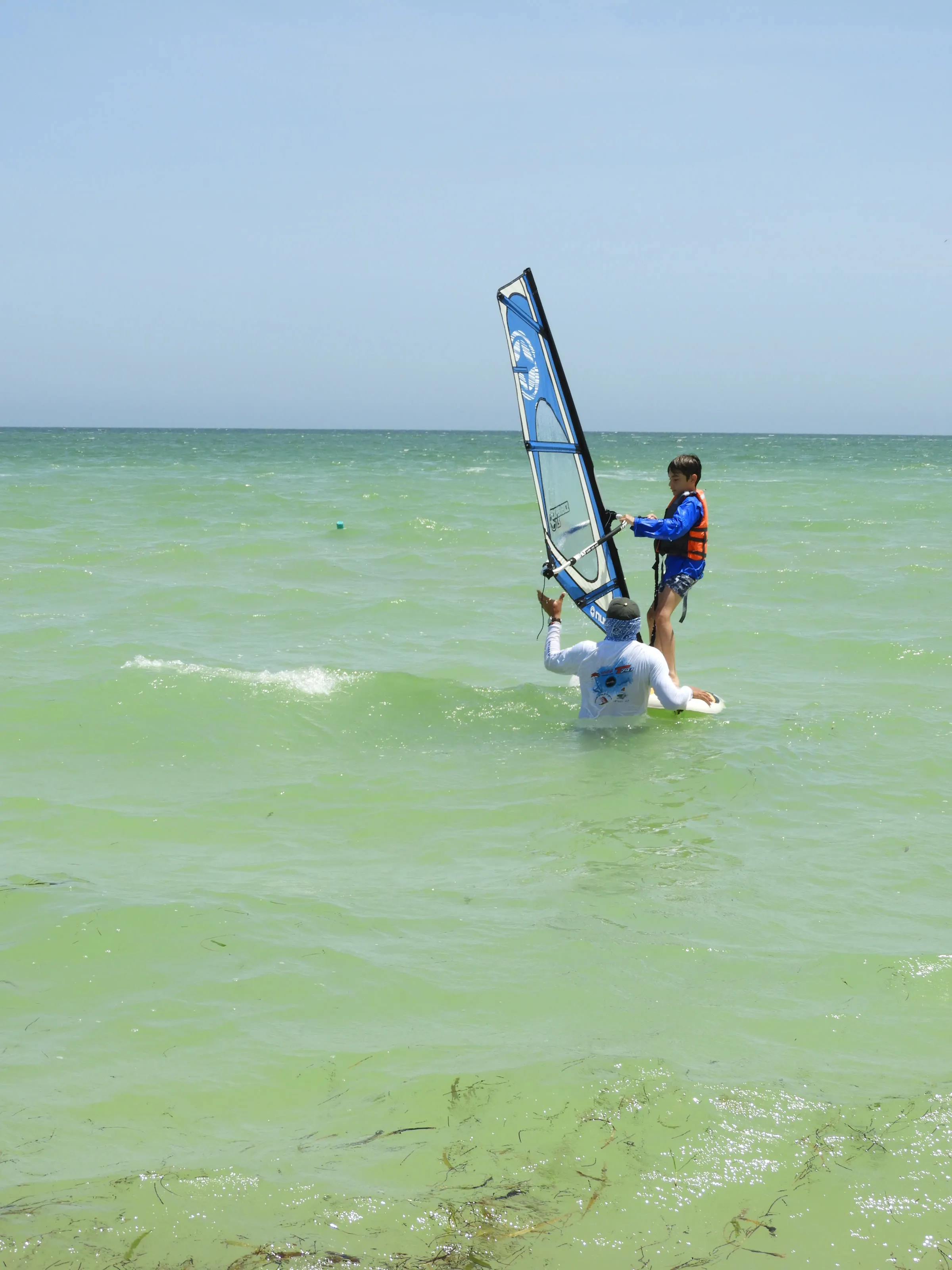
You don’t need strength. You need balance, and balance is trainable
It is the question we get most on WhatsApp: “am I fit enough for this?” Almost always, yes.
This is not about lifting weight, it is about correcting. And balance is not something you are born with: it is a skill. There is a controlled study that compared windsurfers with sedentary people of the same age — the windsurfers swayed less while standing, coordinated better, and were stronger on their non-dominant side.
A gym gives you isolated muscle. This gives you a body that reacts before you think about it. And it does not feel like training, which is exactly why people come back.
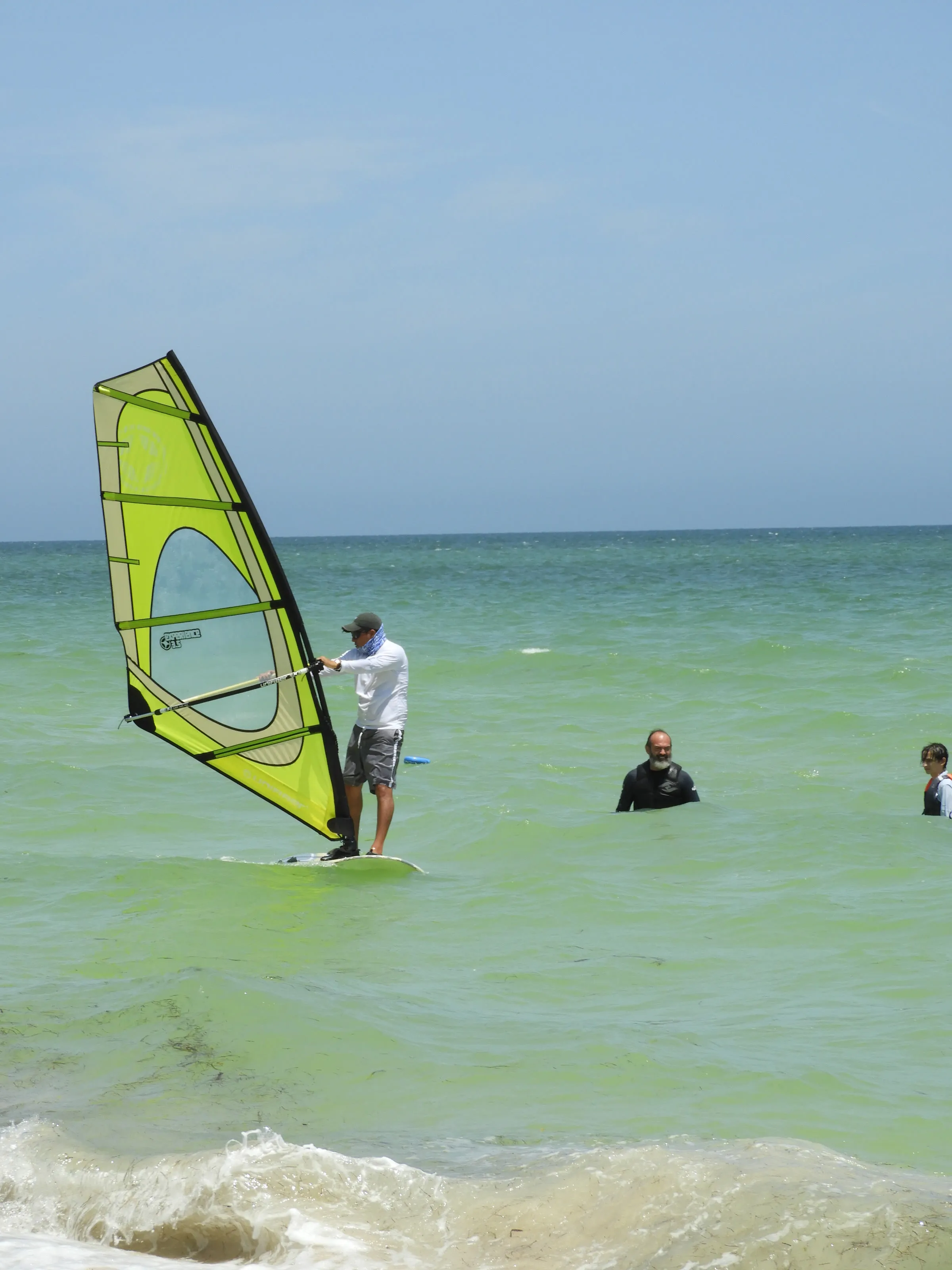
The day you start reading the wind
At first you fight the sail. It is awkward, it is heavy, it goes everywhere except where you want it.
Then one day — usually sooner than you expect — you stop fighting and start reading: where the wind is coming from, how it is shifting, what it will do in thirty seconds. It stops being brute force and becomes a conversation.
That is the skill nobody sees from the beach, and it is the one that changes everything. And it does not stay here: it works on any boat you step onto afterwards.
If you are bringing a child or a grandchild
We take students from age 7, and there is no upper age limit.
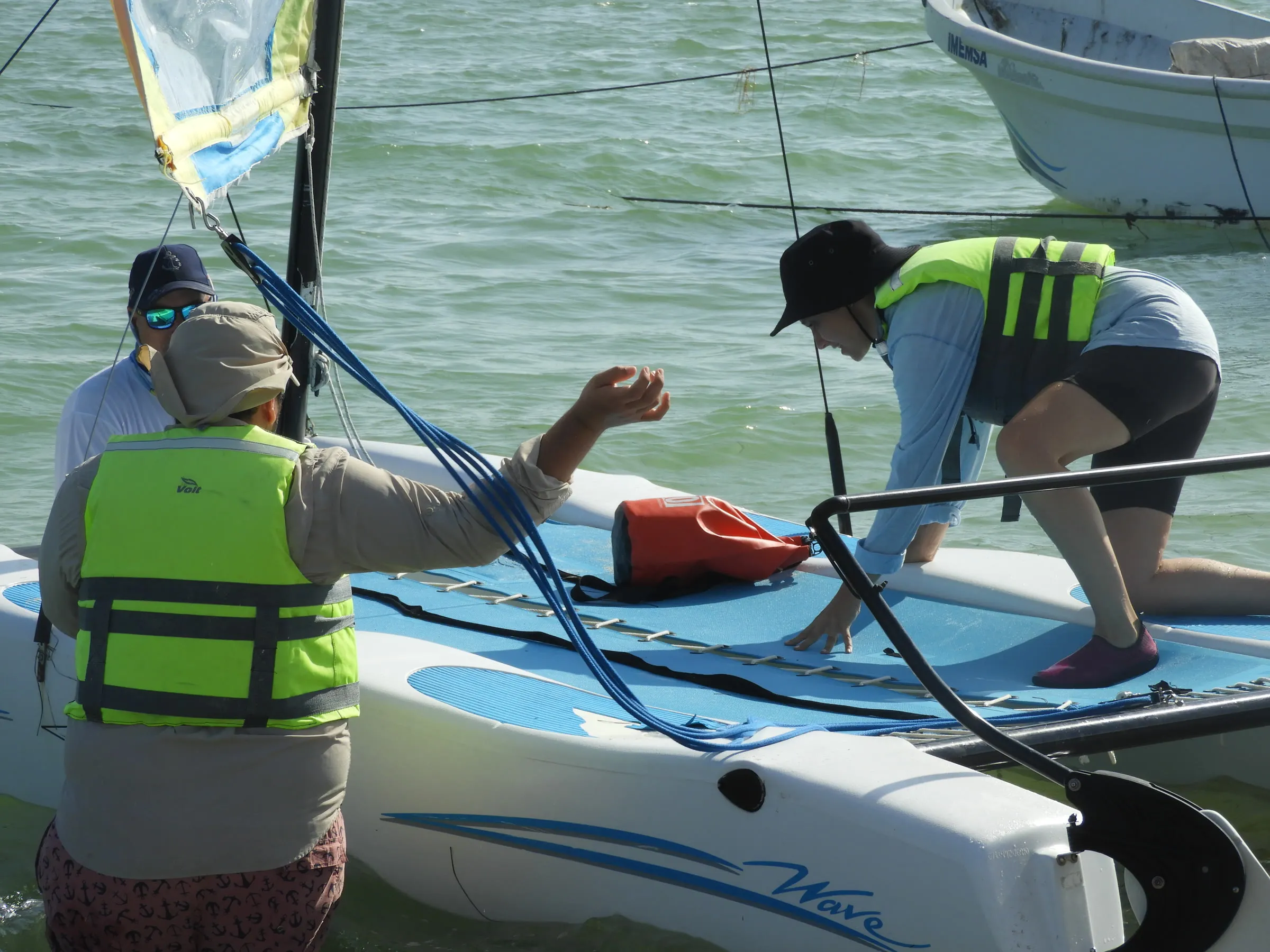
On a Hobie Wave you learn the one thing that settles a parent down: capsizing the boat and righting it again. It is not an accident, it is a manoeuvre you practise. The boat carries a float at the masthead and a righting line for exactly that.
Half an hour of practice and they know exactly what to do if the boat goes over. You do not learn that in a pool.
If you have just moved to the coast
It happens often: someone has just settled in, has the weekends free, and does not know where to start.
A course leaves you with two things, not one. The skill, and a group of people who spent the same Saturday falling in beside you. That is how the weekend group met each other.
Why here in particular
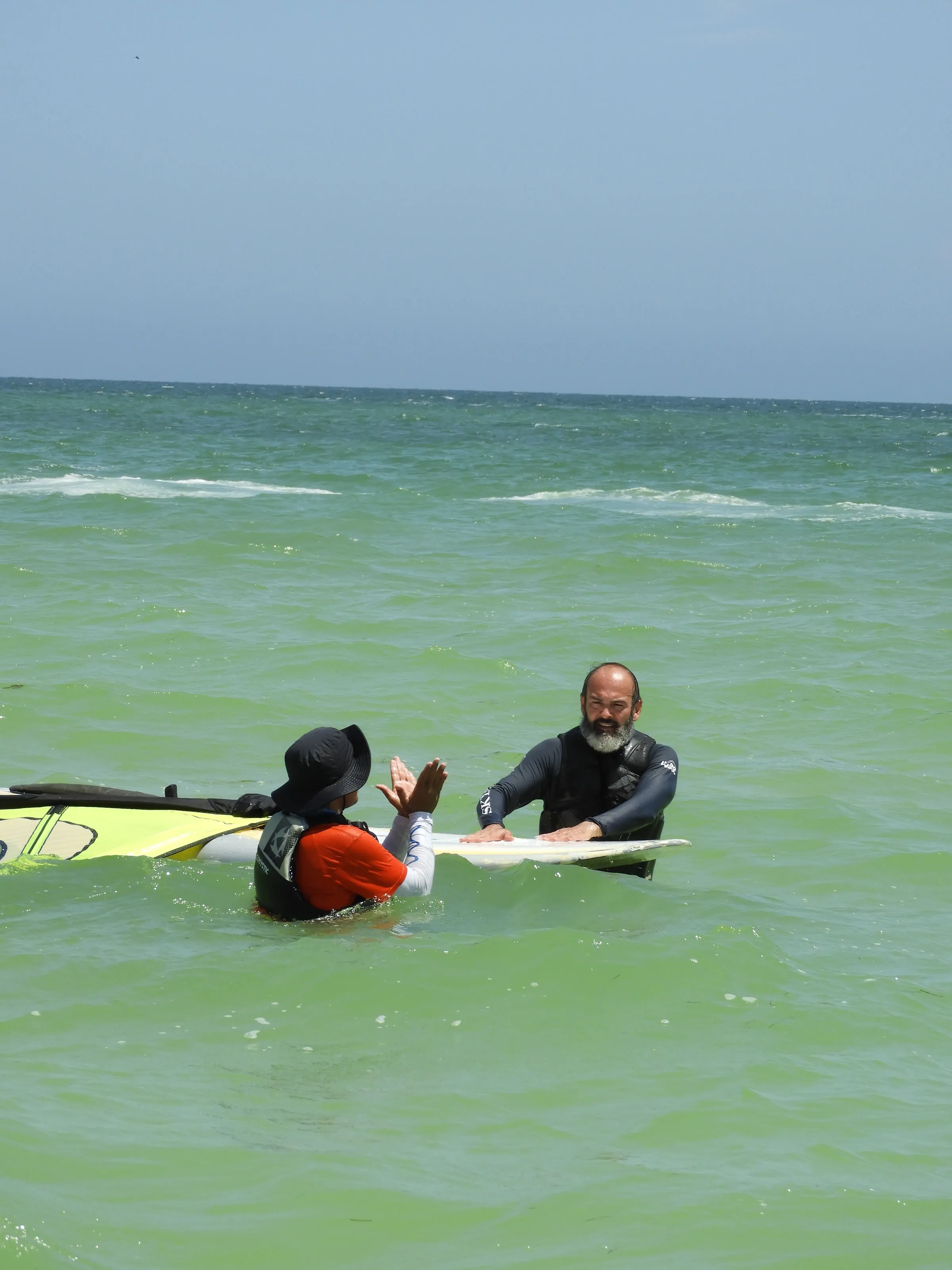
Progreso has flat water, shallow and at 28 °C. That is not a nice-sounding detail: learning in open sea is the most common mistake, because you end up managing waves while trying to do something you cannot do yet.
Local advice: if it is your first time, come between 8:00 and 13:00. The thermal breeze comes in during the afternoon and it rolls beginners.
Eight hours. They never expire.
You book them whenever you want, at your own pace — nobody is rushing you. If a lesson is called off for reasons outside anyone’s control, it gets rescheduled; it is not lost.
- Beginner course8 h · $7,500 MXN
- Single lesson1 h · $1,500 MXN
- Weekend membershipmonthly · $3,500 MXN
From age 7. You need to be able to swim.